Up and Over: Garden Steps Built for Knees, Bins and Wheelbarrow Wheels
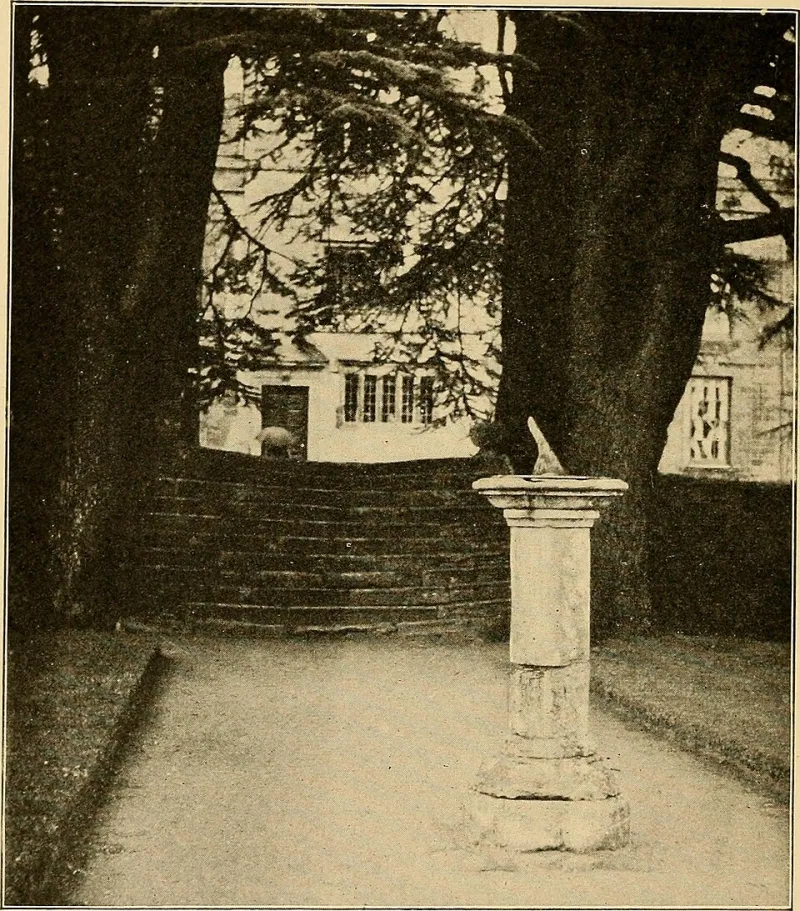
Photo: Internet Archive Book Images, No restrictions, via Wikimedia Commons
Every sloped garden has one piece of hard landscaping that gets used a hundred times more than the patio and gets a fraction of the thought. The steps. They're usually the last thing decided, squeezed into whatever gap is left between the lawn and the retaining wall, and then quietly resented for the next fifteen years.
We've lost count of the flights we've taken out where the treads are 250mm deep, the risers vary by 40mm, and the bottom step lands you in a puddle that never drains. None of that is a mystery. It's just that steps get treated as engineering rather than design, and the engineering gets done in a hurry.
The numbers that do most of the work
For a garden, a comfortable external step sits somewhere around 150mm to 180mm of rise with a 300mm to 400mm going. The old rule of thumb — two risers plus one going should land between 550mm and 700mm — is a decent sanity check and it's survived because it works.
But the single most important number isn't a dimension at all. It's consistency. Human legs are brilliant at adapting to a steep stair and terrible at adapting to a stair where the third riser is taller than the second. That's what puts people on the floor. If you take one thing from this article, make it that every riser on a flight should be within a few millimetres of the others, including the top one that meets the paving and the bottom one that meets the path.
That last point catches people out on sloping ground. A flight that starts level and finishes level needs its total height divided properly across every riser. Fudging the bottom step because the ground falls away is how you end up with a trip hazard two winters later.
If the steps form part of the access route to a dwelling, building control may take an interest — particularly where there's a door at the top. Worth a phone call before anyone lifts a spade.
Landings are not optional extras
A landing is where a flight catches its breath, and where a person does too. At the top and bottom of any flight, allow at least 900mm of flat going before the next change — 1,200mm if you want it to feel generous and to work with a turning wheelbarrow.
Mid-flight landings matter more the longer the flight gets. On a steep garden, break the climb every five or six risers rather than pushing on for ten. It's cheap to add at build stage and impossible to retrofit without pulling the whole thing apart.
Width is the other number people get wrong. 900mm is a workable minimum for a domestic garden path, but 1,100mm to 1,200mm transforms the experience once you're carrying anything.
Test it against real traffic, not a design ideal
Before you sign off a layout, walk it in your head with the actual things that use your garden:
- A wheelbarrow. Roughly 600mm to 650mm across the wheel and handles, and it never travels in a straight line. Give it width.
- A wheelie bin. Pulled, not pushed, usually at an angle, usually in the rain. Bins need a landing to pivot on.
- A buggy or a mobility aid. Requires a level spot at both ends of the flight and a handrail within reach.
- A delivery driver. One hand on a parcel, one on the rail, no patience. Steps that read obviously from the gate get used correctly.
- A child running. Nothing you can design for entirely, but consistency and grip get you most of the way.
If your steps only work for a fit adult in dry shoes, they don't work.
Handrails people actually hold
A handrail should be continuous, roughly 900mm to 1,000mm above the pitch line, and between 40mm and 50mm in diameter so a hand can close around it. Square timber sections are fine so long as they're not so chunky they're a grip test.
Extend the rail past the top and bottom of the flight by 300mm or so. That continuation is what people reach for when they're mid-stride and gravity is winning.
Fit a rail on at least one side of any flight of three risers or more, and on both sides where there's a drop, where the steps are wide, or where anyone in the household has balance issues. Decorative wiggly metalwork that looks lovely in a photograph and flexes when you lean on it is worse than no rail at all, because it teaches people not to trust it.
Surfaces for a wet country
British weather is the real client here. Whatever you choose, it needs texture underfoot when it's damp, and it needs to shed water rather than hold it.
- Riven or textured sandstone — warm, forgiving, widely available, and grippy when wet. Avoid sawn-smooth faces on north-facing flights.
- Clay pavers — excellent grip, though joints need to be properly filled.
- Textured concrete or cast stone — hard-wearing and consistent; ask about the wet slip rating rather than the dry one.
- Porcelain — superb in the right specification, disastrous in the wrong one. Insist on an R11 or R12 rating and a textured face.
- Timber decking steps — fine in dry shade, less fine where algae forms. Grip strips and a slight fall are non-negotiable.
Give each tread a gentle fall to the front — around 1:80 — so water runs off rather than sitting in a film. Keep risers closed. Avoid nosing that projects proud enough to catch a heel. A subtle contrast strip at the front edge of each tread does more for safety than any amount of white paint.
The bit nobody thinks about: the bottom
The foot of a flight is where water arrives, and it's usually where the design stops. A channel drain, a gravel-filled trench or a simple level spreader will stop the bottom step turning into a moat. Whatever you do, don't shunt the run-off onto a neighbour's ground — that's a conversation nobody enjoys and one the law isn't kind about.
The mistakes we see most often
- Risers that vary because the flight was fitted to the ground rather than the ground prepared for the flight.
- A single long flight up a steep bank, no landing, no rail.
- Steps narrower than the path that feeds them, so the route pinches at the worst moment.
- Steps built on soil and a bit of sand, which is a two-winter fix.
- No lighting on the route, so the steps vanish at 4pm in December.
- Steps designed to face the house rather than to meet the line you actually walk.
Tie them into the garden, don't bolt them on
Step flights read best when they're aligned with the sightline from the back door, when the landings double as places to stand, and when the material matches the terrace they grow out of. A landing wide enough for a bench and a pot is no longer a piece of infrastructure — it's a room.
Plant close but not over. A lavender or a low grass softening the edge of a flight is charming; a shrub leaning into a handrail is a hazard with leaves on.
Get the rise and going right, give it landings, put a rail where a hand wants one, choose a surface that behaves in the wet, and deal with the water at the bottom. Then the steps stop being the bit you apologise for and become the part of the garden that quietly does the most work.