Keep the Kerb Appeal: How to Add Parking Without Losing Your Front Garden
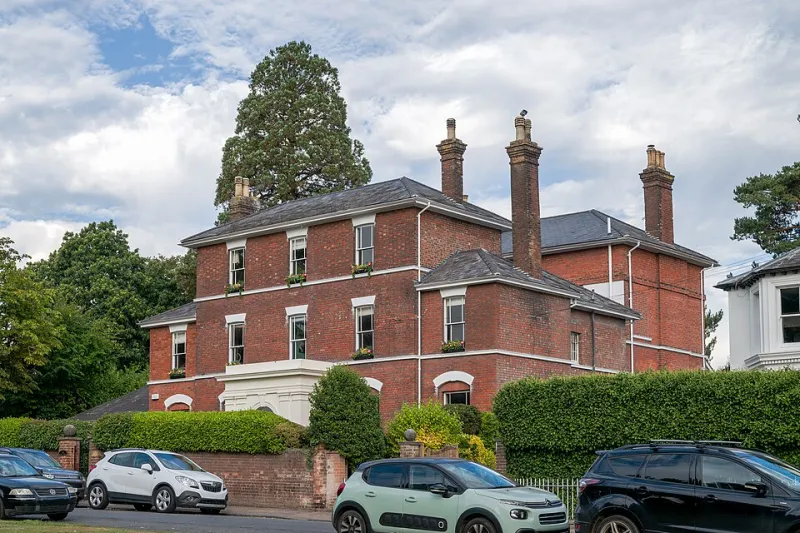
Photo: Tilman2007, CC BY-SA 4.0, via Wikimedia Commons
Paving over a front garden is rarely a decision people make with much joy. It usually starts with a practical problem: two cars, one narrow drive, a bin lorry that will not wait, or a household that needs off-street parking before the next permit renewal. The result is often a sheet of grey block paving, a dropped kerb and a border the width of a dinner plate. It works as parking. It just stops working as a garden.
That is a false choice. A front garden can hold a car and still read as green, soft and cared for. The trick is to treat the driveway as a designed surface rather than a leftover yard.
The car-park look has a cause
Most poor front-garden driveways fail for the same reasons. Everything is the same colour. The surface runs wall to wall. There is no edge, no shadow and no planting. The house appears to sit on a forecourt, and the street loses another small piece of its green frontage.
None of that is inevitable. A driveway needs a clear parking area, a sensible turning space and a safe route to the door. It does not need to occupy every square centimetre. Once you accept that, design decisions get easier.
Check the rules before the first slab goes down
In England, you can usually lay a permeable surface, or direct rainwater to a lawn or border, without planning permission. If you use a non-permeable surface and it covers more than five square metres, planning permission is normally needed. Rules differ in Wales, Scotland and Northern Ireland, and conservation areas, listed buildings and Article 4 directions can tighten things further. Always check with your local authority before ordering materials.
A dropped kerb is a separate permission from planning permission, usually handled by the local highway authority. It is not a formality, and it is not cheap. Factor it in early rather than discovering halfway through that the council has opinions about your sightlines.
Permeable surfaces that earn their place
Permeable block paving is the familiar option, and it works well when installed properly with the right sub-base and falls. Porous resin-bound surfaces can look sharp and modern, but check that the specific product is genuinely permeable rather than just advertised as drainage-friendly. Gravel is cheap and effective, though it migrates unless contained. Grass and gravel grids, reinforced turf and porous asphalt all have a place.
The bigger point is where the water goes. A driveway that sheds rain onto the pavement is not just a nuisance for pedestrians; it adds pressure to drains and can undermine planting. Aim to keep water on site, even if that means a shallow channel leading to a rain garden strip or a gravel-filled trench. It is a small move with a long afterlife.
The planting strip is not decoration
A narrow border between driveway and boundary is often treated as an afterthought. It should be the opposite. A strip of even 300 to 450mm can hold low evergreens, lavender, ferns, grasses or clipped box alternatives, and it immediately softens the hard edge. It also gives insects somewhere to live and stops the driveway from reading as a car park with a house attached.
Keep plants away from the damp-proof course, leave room for car doors and do not raise soil above the house's existing ground level. If the drive slopes towards the house, deal with the drainage before you fall in love with a paving pattern. A linear channel or a planted soakaway strip can look deliberate rather than remedial.
Design moves that stop the forecourt look
Use one paving material, one edge detail and one clear parking zone. Too many materials make a small front garden look busy, not generous. A simple gravel margin or a set of stepping stones can break up a large paved area without adding clutter.
Think about the view from the street as well as the view from the car. A low hedge, a small tree in a root-control planter or a pair of clipped shrubs at the boundary can frame the house and hide the bonnet. Lighting should be practical and quiet: a couple of bollards or wall lights rather than a floodlit car showroom.
Finally, leave space for the things that make a front garden useful. A bin store, a cycle anchor and a path to the door should be designed in, not squeezed in later. Good driveways are not just about cars. They are about how the whole frontage works on a wet Tuesday.
A front garden can be parking and planting at the same time. It just needs a bit more thought than a lorry load of blocks.