The Big Tree Stays: Designing a UK Garden Around an Established Canopy
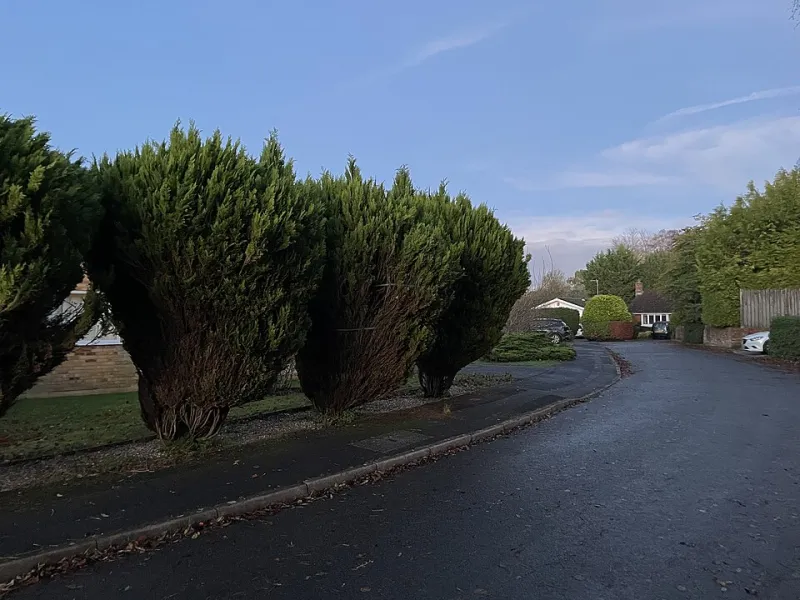
Photo: Mr Ignavy , CC BY-SA 2.0, via Wikimedia Commons
Most UK gardens come with one feature that refuses to be moved: a big tree. It might be a handsome oak at the bottom of the plot, a towering Leyland cypress next door, or an apple tree that has been there longer than the house. The temptation is to treat it as an obstacle — something to trim back, build over or dig around. The better approach is to plan the garden around it. A mature tree gives shade, privacy, wildlife value and a sense of settled age that no new planting can fake. It also has roots, and those roots do not read your landscaping drawings.
Start with the tree, not the patio
Before you choose paving, pick a shed position or order a tonne of topsoil, put the tree on the plan first. Measure the trunk diameter at roughly chest height, note the spread of the canopy and look at the ground around it. Are there exposed roots? Is the soil compacted from years of standing in the same spot? Does the tree lean, and if so, which way? Are there dead branches overhead? These details shape everything else.
It also helps to decide what you actually want from the space. A seating area under the canopy sounds lovely until you realise the lawn beneath is thin, dry and covered in fallen leaves for three months. A path past the tree may be essential, but it does not need to be a metre-wide concrete strip. Good design around a mature tree is usually a case of adjusting the brief, not fighting the site.
The root zone is bigger than you think
Tree roots are not a neat mirror of the branches above. They often spread well beyond the canopy, and most of the feeding roots sit in the top 30–60cm of soil. That is exactly where most garden works happen. Digging, trenching, rotavating, storing gravel and parking a van can all compact or sever roots that the tree needs.
For development projects, arboriculturists often use a root protection area based on 12 times the trunk diameter. A tree with a 40cm trunk would have a starting radius of about 4.8m. That is not a universal legal rule for ordinary domestic gardening, but it is a useful warning sign. If your proposed path, shed or deck sits within that kind of distance, treat the ground with care and get advice before you start.
The biggest avoidable mistakes are simple. Do not raise soil levels over the root zone to create a new border. Do not strip turf and dig down to make a patio. Do not pile building materials against the trunk. And do not assume that because the tree looks healthy, a bit of root damage will not matter. Mature trees can decline slowly over years after a single badly timed trench.
Light, leaves and dry shade
A mature tree changes the garden beneath it. There is less light, certainly, but also less rain reaching the soil. The canopy intercepts water and the roots take a share of what is left, so the ground can be drier than the rest of the garden even in a wet British winter. Lawns often struggle. So do thirsty shrubs and anything that needs full sun.
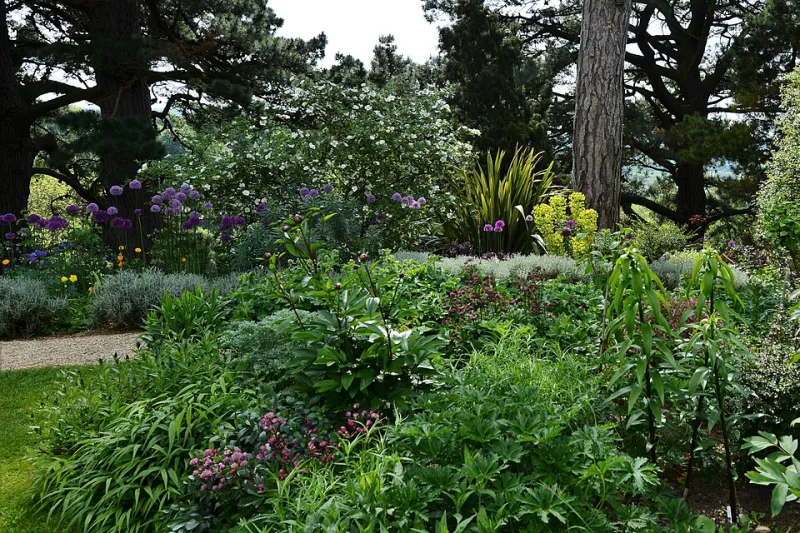
This is not a reason to give up on the space. It is a reason to choose plants that expect woodland conditions. Think ferns, hellebores, epimedium, hardy geraniums, foxgloves, wood anemones and spring bulbs that get going before the canopy closes over. Small shrubs such as some viburnums and mahonias can work where there is a little more room, but check the mature size before planting. The aim is a layer of greenery that looks after itself, not a border that needs watering every evening in July.
Leaf fall is part of the deal. Rather than treating it as a weekly chore, use some of it. A thin layer of leaves left under the canopy can act as a natural mulch and support the soil life. Just do not smother the base of the trunk or create a deep, damp mound against the bark. Clear leaves from paths, gutters and drains, and keep them away from any low decking or shed base where they can hold moisture.
Paths, decks and sheds without wrecking roots
Hard landscaping near a tree needs a light touch. For paths, the best approach is usually a no-dig or shallow-build system. A permeable gravel path over a geotextile membrane, or stepping stones set into the existing ground, can work well without deep excavation. Avoid concrete edging that requires a trench through the root zone. If you need a firm edge, look at peg-in edging or timber that sits on the surface rather than being buried.
Decks are trickier. A raised deck can be a good way to create level seating without digging, but the supports must be positioned carefully. Ground screws or adjustable pedestals can reduce excavation, but they still need to miss major roots. Keep the deck far enough from the trunk to allow for future growth, and leave gaps so the tree can be inspected. If the only practical position is close to the tree, ask an arboriculturist to advise on support positions before the decking firm arrives.
Sheds and summerhouses are best kept outside the main root zone. A small shed on skids or a base of concrete piers can work, but avoid a full concrete slab dug into the ground near the tree. In conservation areas, outbuildings may have different permitted development rules, so check with the local council before assuming a shed can go wherever you like.
The legal bit comes before the dig
In the UK, a Tree Preservation Order can protect a tree even if it is in your own garden. Conservation areas also bring extra controls. Pruning, felling or even some works that could damage a protected tree may need consent or notification. The rules vary, so check with your local planning authority before booking a chainsaw or a digger. If the tree is shared with a neighbour, make sure you know where the boundary sits and who owns what.
Even where no protection applies, it is worth getting a qualified arboriculturist to look at the tree before major works. They can identify deadwood, disease, root problems and future risks. They can also tell you what pruning, if any, is sensible. Topping and heavy pruning are rarely good answers, and badly timed work can leave a tree stressed and more dangerous than before.
Maintenance that keeps the peace
A garden designed around a mature tree will still need looking after. Clear leaves from gutters and drains. Keep an eye on paving and decking for movement caused by roots. Do not strim or mow tight against the trunk, because bark damage is an easy way to invite disease. Have deadwood checked by a professional rather than trying to reach it from a ladder with a pruning saw.
Most of all, plan for the tree to keep growing. Leave room for the trunk to expand and the canopy to spread. A path that just clears the tree today may be pinched in ten years. A shed placed tight against the root zone may become a problem the first time it needs replacing.
The big tree is not the enemy of a good garden. It is the reason the garden has character. Work with its roots, its shade and its leaves, and you end up with something more useful and more beautiful than a plot that has been scraped flat and started again.