Footfall First: Garden Paths That Follow Real Life, Not the Drawing
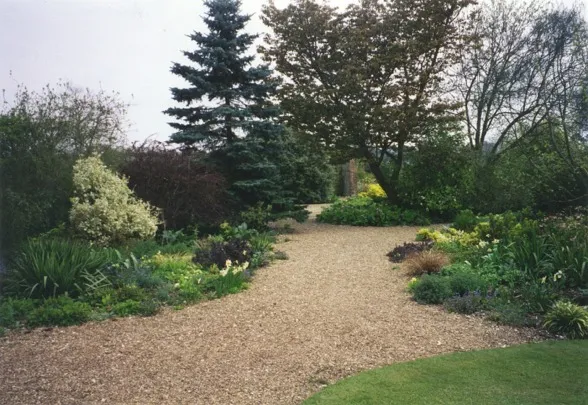
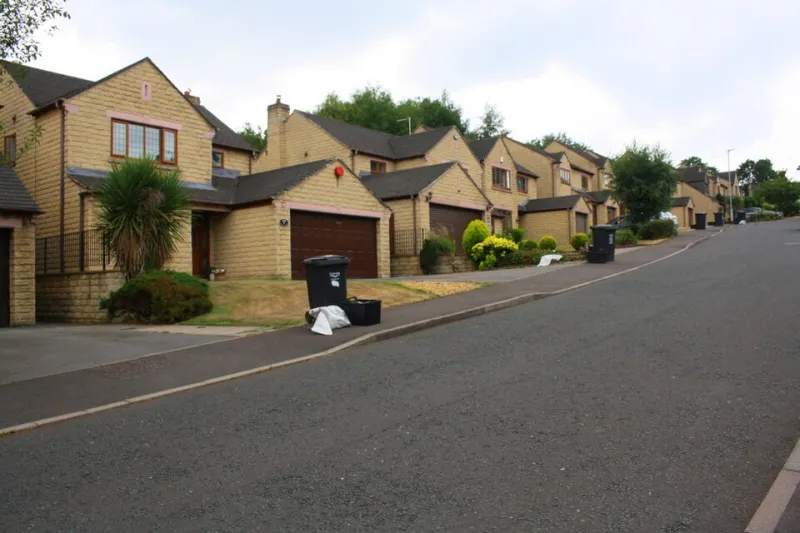
Photo: Tom Pennington, CC BY-SA 2.0, via Wikimedia Commons
Most garden plans start with a tidy line from the back door to the shed. Then real life arrives: someone cuts across the lawn to the bin store, the dog takes the same shortcut every morning, and by January there is a pale, muddy stripe where the drawing said there should be grass. That stripe is not a design failure. It is useful information.
Garden paths work best when they follow how people actually move. Not how they move on the day the landscaper arrives, and not how they move in a neat 3D sketch, but how they move on a wet Tuesday in November with a recycling box in one hand and a reluctant child in the other. If you watch the garden for a week or two before committing to paving, you will usually learn more than any catalogue can tell you.
Start with the grass, not the catalogue
Before you look at paving samples, look at the lawn. Worn turf is the cheapest survey you will ever commission. Check for flattened edges where people turn, dead patches under a regular shortcut, and muddy gateways that never quite recover. After rain, footprints show up like a route map.
In a UK garden, these signs are especially clear in late autumn and winter. Clay soils hold the evidence well: a few weeks of daily traffic and the desire line is obvious. Sandy or chalky ground may drain faster, but the flattened grass still tells the story. Watch where people step when they are carrying something, where they cut a corner to reach a seat, and where they avoid a route because it feels narrow, dark or slippery.
A simple trick is to lay a few temporary stepping stones or a strip of bark along the observed route. Leave it for a month. If it feels natural and gets used, you have found your path. If it sits untouched, you have saved yourself the cost of paving a route nobody wanted.
Not every path has the same job
A garden path is not one thing. The route from the back door to the bin store has different requirements from a stepping-stone trail to a wildlife pond. Treating them the same usually means either over-building the quiet route or under-building the busy one.
As a rough guide, a main household route should be comfortable for a wheelie bin, a wheelbarrow or two people passing. Around 1.2 metres is a sensible target for the busy spine of the garden. A secondary route used by one person at a time can be narrower, perhaps 900mm, and a lightly used stepping-stone path can be narrower still. The key is to avoid pinch points. A path that is wide for most of its length but narrows to 500mm at the gate will still feel like a obstacle course.
Think, too, about turning circles. Bins need space to be swung round. Wheelbarrows need a little breathing room at corners. If the path ends in a tight dead end, people will simply walk on the lawn beside it.
Materials that cope with a British winter
The best path material is not the prettiest one in the showroom. It is the one that still works after a fortnight of drizzle, a frost and a delivery van turning on it. In the UK, slip resistance and drainage matter more than a perfect finish.
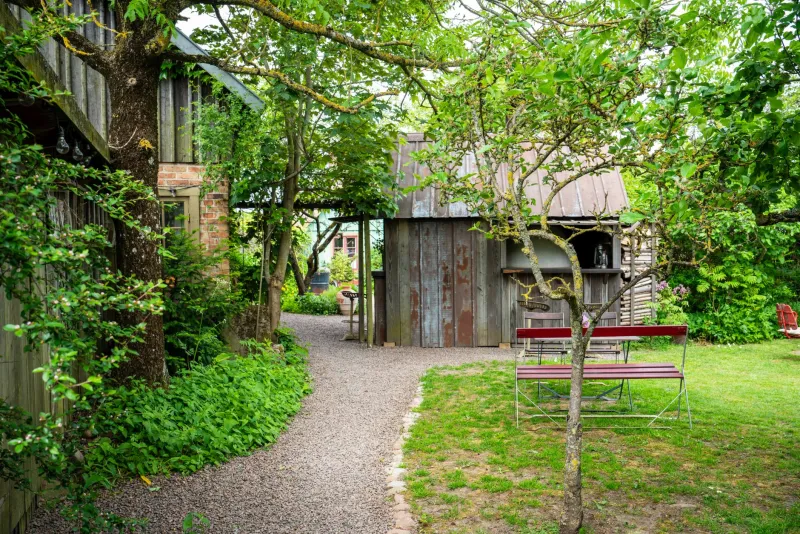
Textured porcelain, riven natural stone and clay pavers all perform well when laid properly with a slight fall away from the house. Resin-bound gravel gives a firm, relatively smooth surface and can suit modern gardens, though it needs a competent installer. Loose gravel is fine for quiet routes and good for drainage, but it is miserable to wheel a bin across and tends to migrate on slopes. If you want gravel on a main route, consider a stabilised system rather than a loose layer.
Timber decking can be lovely, but shaded decking in a wet garden can become slick with algae. If you use it, plan for cleaning and avoid putting it on the main bin route. Whatever you choose, edge it properly. A path that spills into the border soon becomes a path with a muddy fringe, and then a path people stop using.
Redirect routes without a fight
Sometimes a desire line goes somewhere you would rather it did not: across a newly planted border, through a lawn you are trying to repair, or past a window where you want a little privacy. The instinct is to block it. A fence, a hedge, a large pot. Sometimes that works. Often it simply creates a new, messier route a metre to the side.
A gentler approach is to make the intended route easier than the unwanted one. Widen the corner people are trying to cut. Improve the surface where the ground gets muddy. Move the gate, the bin store or the seat so the natural line changes. Use planting to soften a route rather than to declare war on it. If people keep stepping over a low border, the border is in the wrong place.
This is especially true in small UK gardens, where there is limited room for grand gestures. A well-placed specimen shrub or a change in level can guide footfall without feeling like a barrier. The aim is not to police the garden. It is to make the sensible route also the easiest one.
Design for the garden you have
A good path does quiet work. It keeps mud off the kitchen floor, protects the lawn in winter, makes the bin store reachable in the dark and turns a soggy garden into one you can actually use. It also sets the mood of the space: formal, relaxed, cottagey or contemporary, depending on the material and the detailing.
So before the drawing is finalised, spend a little time watching the garden as it is. The worn grass is not an inconvenience to be erased. It is a plan drawn by everyone who lives there. Follow it, adjust it where needed, and build the path around the life that is already happening.