A Home for the Bins, Bikes and Bags: Planning a Garden Utility Corner That Earns Its Place
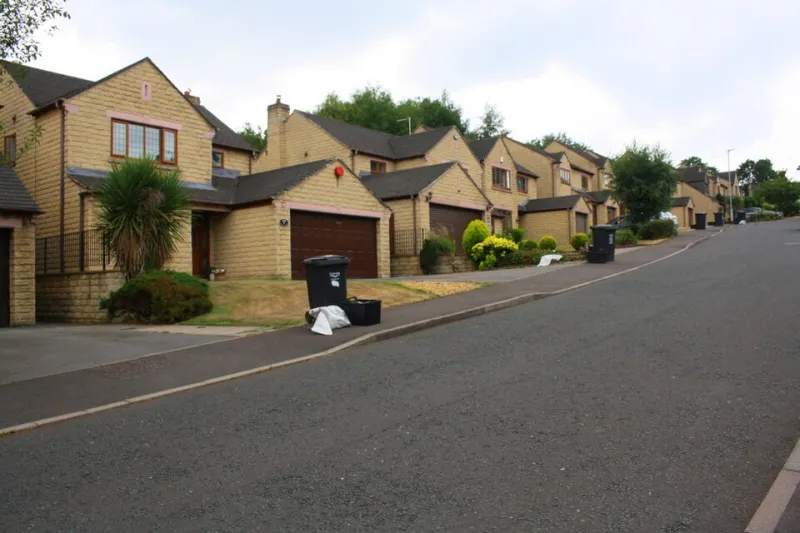
Photo: Roger Templeman , CC BY-SA 2.0, via Wikimedia Commons
Every garden has a less photogenic job to do. Somewhere, the wheelie bin has to sit. The bikes need to come off the car without scraping the wall. The secateurs, bird seed, camping chairs and half-used bag of compost need a home that isn't the kitchen table. Group these things badly and they spread: a bin by the back door, a bike under a tarpaulin, a tool bag on the step. Group them well and the rest of the garden gets to breathe.
The trick is to design a utility corner on purpose. Not a dumping ground screened off in a panic, but a small working zone with a sensible route, a surface that can take a wheel, and enough screening to soften the view without making the space awkward to use. It is one of the least glamorous parts of garden design, and one of the most useful.
Start with the route, not the screen
Before choosing a bin store or a bike shed, walk the journey. On collection day, how does a 240-litre wheelie bin get from its parking spot to the pavement? A standard bin is roughly 58cm wide and 74cm deep, so a narrow side return with a gate latch that catches your sleeve will soon become a nuisance. Measure the opening, the turning space and the path. If the route involves steps, gravel or a tight 90-degree turn, the bin will be dragged rather than rolled.
For terraced houses and tight side returns, the best utility corner is often close to the front boundary but hidden from the street. For gardens with rear access, a spot beside the shed or at the end of a path usually works better. The principle is simple: the utility zone should be easy to reach in the rain, easy to wheel a bin through, and out of the main line of sight from the kitchen window or patio.
Choose ground that can take a wheel
Bins are heavy when full, bikes arrive muddy, and log baskets get dropped. Loose gravel may look smart, but wheelie bins sink and bike stands wobble. A firm, level surface is kinder: paving, resin-bound gravel, concrete, or reinforced grass grid if you want a greener finish. A small apron of paving outside a shed or bin store also stops mud being walked back into the house.
If the utility corner sits on a slope, keep the fall gentle and away from the house. A level pad for the bins is safer than a sloping one, and a shallow channel or drainage strip at the low edge will stop water pooling around the wheels. For bike storage, a simple ground anchor or a fixed stand makes the space feel intentional rather than improvised.
Screen for access, not concealment
Screening works best when it hides the clutter from the house and the street while leaving the working side open. A slatted timber screen gives airflow and looks lighter than a solid panel. Evergreen hedging, such as yew or holly, can soften a bin store over time, but leave enough gap for the lids to open and for you to sweep behind. Trellis on top of a low wall is another option for small gardens, provided it is fixed securely and does not create a wind trap.
Bin stores with lift-up lids are popular, but check the clearance above them. A store that needs 1.2 metres of clear space to open is no good under a low window. Bike sheds need a door that opens fully and a little space to manoeuvre. If the corner is visible from a neighbour's upstairs window, a pergola or a slim evergreen screen can take the edge off the view without building a fortress.
Drainage, smells and the wet UK climate
Bins and bikes live in the damp. Put a bin store directly against a fence with no airflow and the inside will smell before the bin is full. Leave a gap behind the store, use slatted or perforated panels, and avoid sealing bins into a tight cupboard. A hose-downable surface and a slight fall to a drain or planting bed make cleaning easier.
If you are adding hardstanding, think about where rainwater goes. In many UK gardens, surface water should not be piped into the foul sewer. Permeable paving, a gravel-filled trench or a small rain garden at the edge can deal with runoff from a modest utility pad. If the corner sits under a roof, a water butt is a practical addition, but make sure it is stable, child-proof and positioned where it will not block the bin route.
Bin rules, covenants and the small print
Councils set their own presentation rules for waste. Some ask for lids closed and handles facing the road; others specify a collection point, bin weights or that bins are out by a certain time. Check your local authority's waste pages before you fix a bin store in place, because a beautifully built store is no help if the collection crew cannot reach the bin.
It is also worth checking the deeds or estate management rules for your property. Some newer estates restrict sheds, bin stores or fencing in front gardens, and some covenants require certain materials or heights. If you live in a conservation area or a listed building, consent rules may apply. This is not the exciting end of garden design, but a quick check now can save an expensive rethink later.
Bikes, tools and the log store
A utility corner can do more than house bins. A slim bike shed with a secure lock, a ventilated log store and a lockable tool cabinet can share the same paved apron. Keep the dirty jobs together: boots, bike cleaning and tool storage sit naturally beside a tap and an outdoor socket, while the log store stays off the ground on bearers so air can move underneath.
Try not to overcrowd the zone. A corner that holds everything often ends up holding too much. Give each item a clear footprint: bin, bike, tools, logs. If the space is small, choose one good combined store rather than three wobbly plastic boxes. A simple bench with storage underneath can also earn its keep beside a utility area.
Light the handle, not the whole garden
Utility corners are often used early in the morning or after dark. A low-glare wall light or a small PIR light aimed at the path is enough. Warm white light is kinder to neighbours and wildlife than a bright security floodlight. If the bin store is away from the house, a solar-powered light with a modest output can mark the route without wiring. The aim is to see the latch and the path, not to turn the corner into a car park.
A corner that ages well
A good utility corner does not need to be beautiful in a magazine sense. It needs to be robust, easy to clean and simple to use. Get the route right, put down a firm surface, allow air around the bins and keep the screening one step softer than a stockade. Done well, the bins, bikes and bags stop being a running argument and become what they should be: a quiet, practical part of a garden that works for real life.