North-Facing Gardens: Turning the Cold Corner Into the Best Room Outside
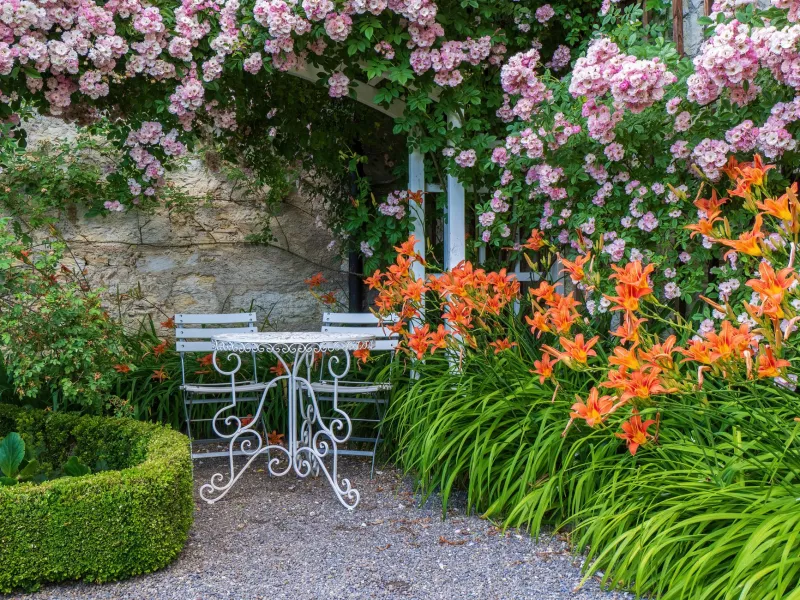
A north-facing garden gets a bad press. It is described as dark, damp and difficult, as if the only sensible response is a patio, a shed and a few pots of ivy. That is a limited way to look at a space that often has one thing UK gardens rarely get enough of: reliable shade.
Shade is not a defect. It is a different climate. Once you design for that climate rather than against it, a north-facing garden can feel calm, green and surprisingly usable.
Stop waiting for the sun
The first mistake is treating a north-facing garden as a south-facing garden that has not tried hard enough. Sun-loving plants will sulk. Lawns will thin. Paving will stay damp. The answer is not to fight the aspect with extra fertiliser and wishful thinking.
The second mistake is to pave the whole thing because it is easier to keep clean. That solves a maintenance problem by creating a design problem. A shaded patio can be a cold, slippery place for much of the year, and it throws away the one quality the garden has in abundance: soft, even light.
Start with structure, not flowers
In shade, structure does the work that colour does in a sunny border. Evergreen shrubs, small trees, clipped hedging and strong fence lines give the eye something to follow. A garden with good bones looks intentional even in February.
Think about height as well as spread. A multi-stem birch or a compact acer can lift the canopy and let light through, while evergreen shrubs at the boundary create a green backdrop. Bamboo can work in a contained planter, but keep it contained unless you enjoy a long-running argument with rhizomes.
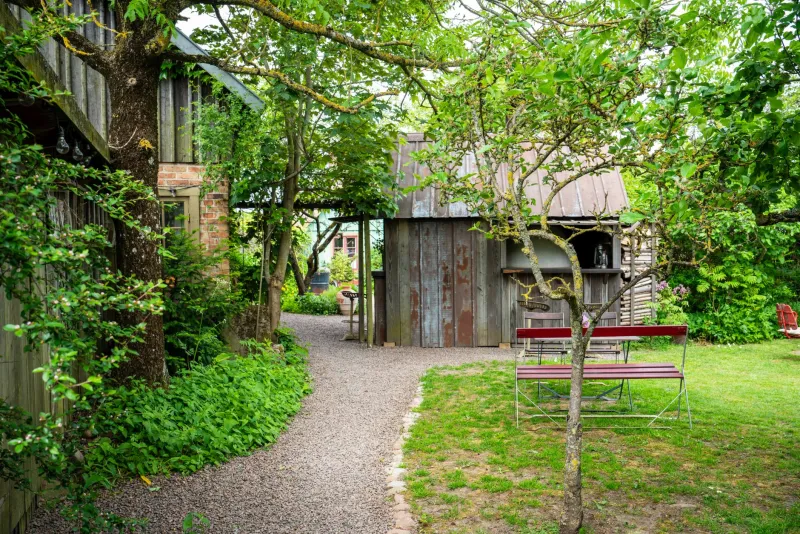
A pergola or simple timber frame is useful here. It defines a seating area, supports climbers and makes the garden feel like a room rather than a strip of ground behind the house. It also gives you somewhere to hang lighting, which matters more in a shaded garden than a sunny one.
Foliage does the heavy lifting
When direct sun is scarce, leaf texture becomes the main event. Large hosta leaves, fine fern fronds, strappy grasses and variegated evergreens create contrast without needing flowers. Green comes in more shades than most people expect: acid, olive, blue-grey, deep forest and near-black. Use that range deliberately.
Ferns are the obvious heroes, but do not stop there. Hellebores bring winter interest, epimedium and tiarella make good ground cover, and hydrangeas cope with cooler conditions if the soil stays reasonably moist. Astilbe adds feathery texture in damp spots. Climbing hydrangea can cover a shady wall slowly but handsomely.
For businesses, the same logic applies. A north-facing courtyard does not need to be a dead zone. A green wall, a few large planters and a sheltered bench can turn an overlooked corner into a staff break area or a quiet meeting spot.
Planting for damp shade without the mud
North-facing gardens often hold moisture better than sunny ones, which is an advantage until it becomes a bog. Improve the soil with organic matter, but do not assume every plant wants wet feet. Check drainage in the lowest corner and deal with any ponding before planting.
Raised beds are a practical answer. They lift roots out of standing water, warm up slightly earlier and make maintenance easier on the back. A gravel mulch can reduce surface mess, while a simple path keeps feet out of the border during wet spells.
Slugs and snails will be part of the conversation. Choose tougher leaves where you can, encourage birds and frogs, and accept that a hosta with a few holes is still doing more for the garden than a bare patch of paving.
Hardscaping for a cool, usable room
Paving in a north-facing garden should be chosen for grip and light, not just looks. Pale stone, gravel or textured concrete can brighten the space without glaring. Avoid large expanses of dark, smooth paving that stay slick after rain.
Keep paths generous enough for two people to pass, and make sure the route from the back door is safe in wet weather. A small seating area positioned against a sheltered wall will be used far more than a grand patio in the middle of the lawn. Add a water feature only if the sound improves the space and the maintenance is manageable.
Lighting changes everything in shade. Warm, low-level lights along a path, a couple of uplighters in a tree and a battery-powered lantern on the table can make the garden feel inviting after dark. It is not about turning night into day. It is about extending the hours you can use the space.
Make peace with the green
A north-facing garden will never be a mediterranean terrace, and that is fine. It can be a mossy, leafy, cool-headed place that feels good on a hot day and still has structure in winter. Design for the aspect you have, not the one you wish you had. Shade is a feature. Treat it like one.